
Pepperonata, two ways
Summer sandwiches and simple pasta

I lost count of the number of times I apologised for my so-called baby brain while pregnant. Maybe I’d got some dates mixed up when arranging to meet friends, or dropped the ball on a work project. “Sorry!” I’d shrug, embarrassed. “Baby brain strikes again!"
Looking back, I wonder why I felt the need to make excuses for the occasional bout of forgetfulness when I was preoccupied with growing a tiny human. Baby brain isn’t just an old wives’ tale, but a very real phenomenon. Research has found that when a person goes through pregnancy and childbirth, the structure of their brain changes. The amount of grey matter shrinks, and it can remain in this altered state for up to two years after childbirth.
This isn’t just another one of nature’s ways of playing tricks on mothers to be – it’s for good reason. The process removes connections between brain cells in order to encourage new neural pathways, helping mothers focus on caring for their baby. Mothers, or primary caregivers, also experience a huge, primitive surge in oxytocin after birth which activates an opening of the brain’s amygdala, causing them to be extra vigilant and worried about their new baby. The amygdala never changes back – so it’s true when people say you’ll never stop worrying about your kids.
Thinking about this made me feel better when I found myself in the supermarket this week, staring blankly at the shelves, with little more than some red peppers, onions and tomatoes in my basket. I’ve never been great at planning meals for the week, but since my son was born, the moments of food-shop paralysis have become ever more frequent.
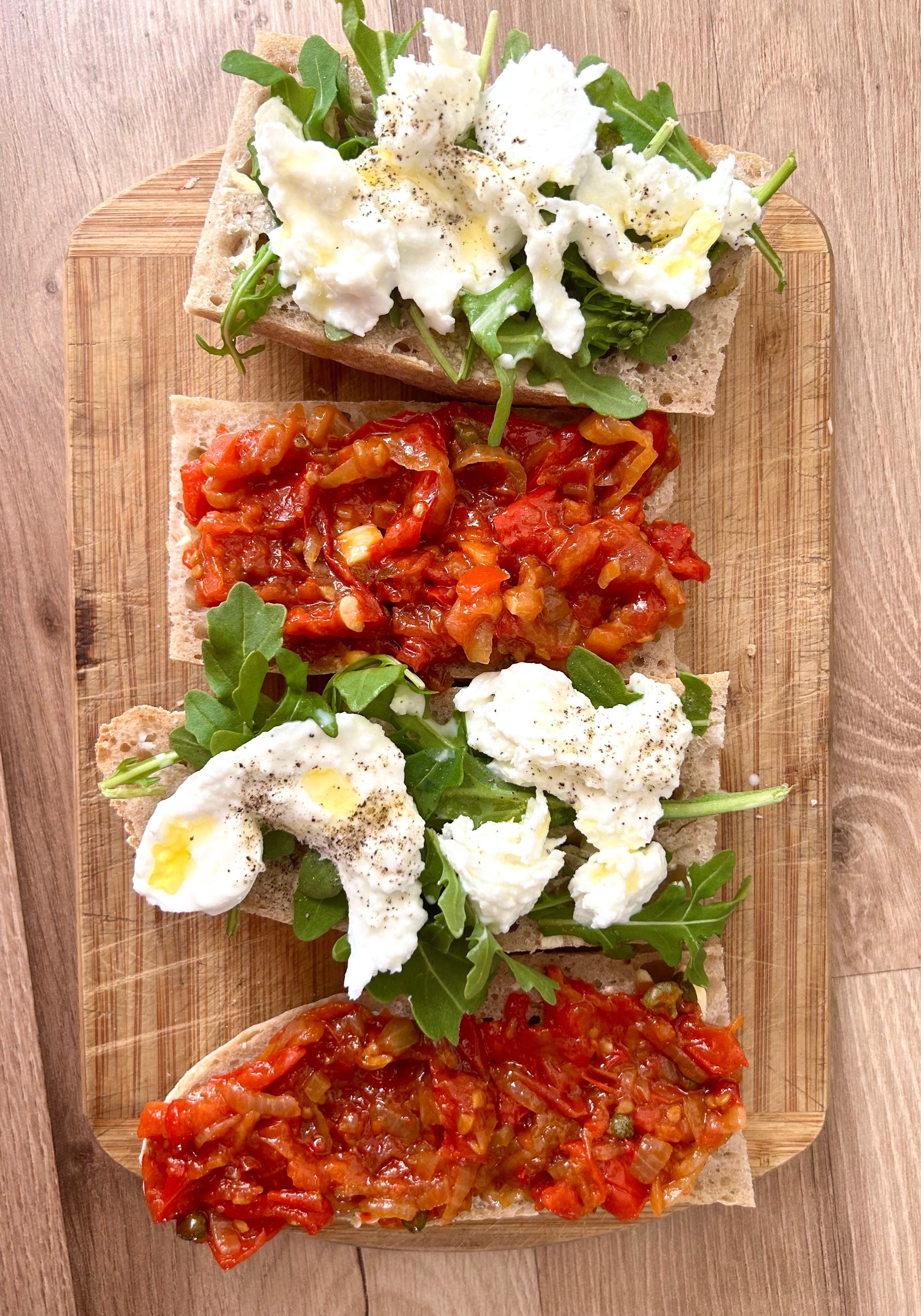
As it turned out, I had the makings of two delicious dishes. The base of both was pepperonata, made by slow-cooking peppers until they’re jammy and intensely sweet. It’s a dish that tastes of much more than the sum of its parts. The recipe, incidentally, is the ideal thing to cook when your brain isn’t quite in gear – just a bit of methodical chopping and mindful stirring required. Half was made into a simple pasta dish, with chickpeas for heartiness, the rest into doorstopper picnic sandwiches.
As I stirred the sauce, my son babbling away in his high chair, I made a mental note not to give myself a hard time about the to-do lists left unticked, the nursery still not decorated, the promised phone calls yet to be made, the fridge not stocked. We’d be sitting down to a half-decent dinner that night and, at the moment, that’s good enough for me.
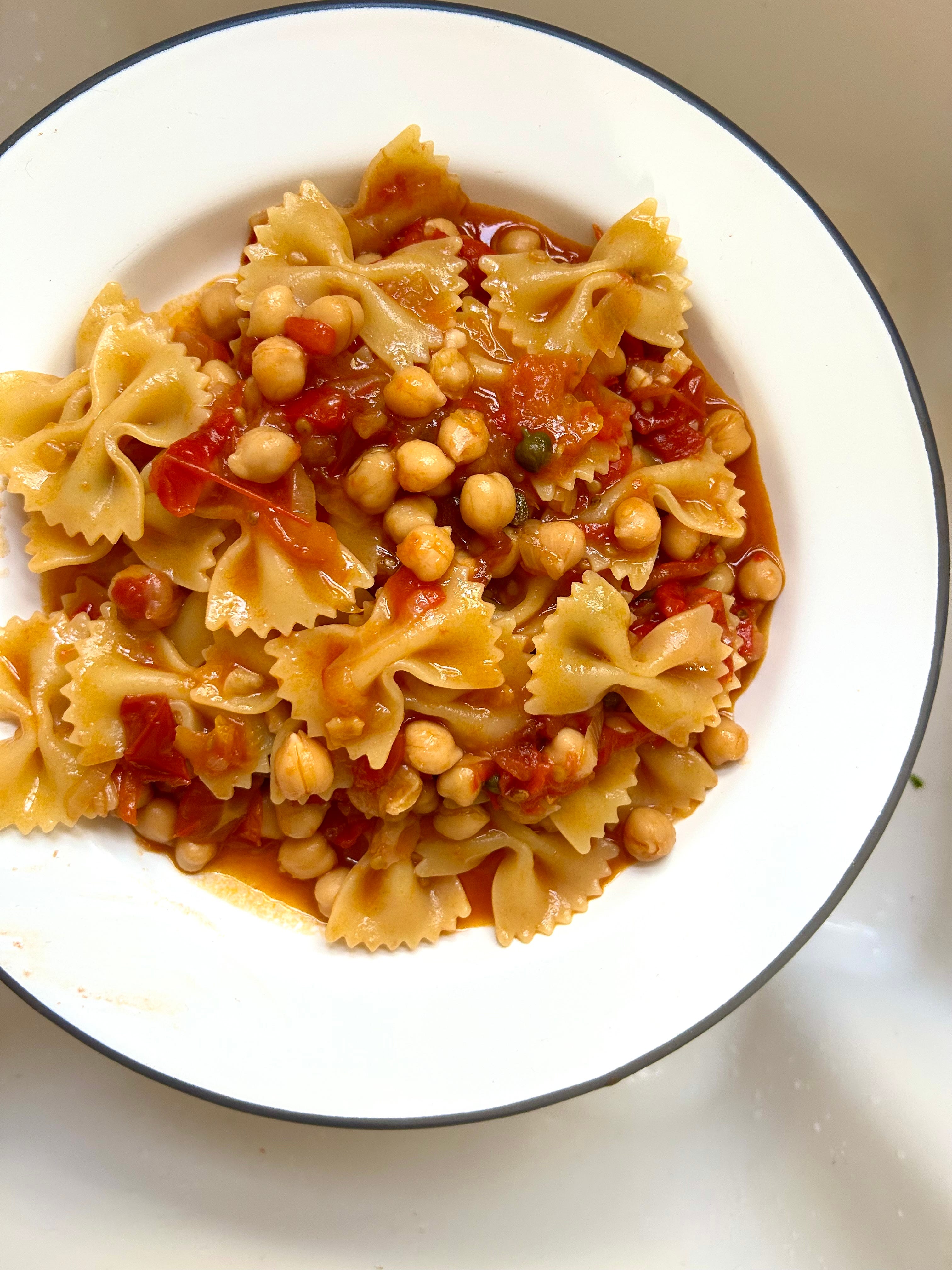
Pepperonata pasta
Serves 2, with leftovers
3 red peppers, sliced
1 large white onion, sliced
3 cloves garlic, thinly sliced
3 ripe tomatoes, diced
2 tsp capers (optional)
Splash red wine vinegar (optional)
For the pasta
1 tin chickpeas
200g pasta (I used farfalle)
Parmesan, to serve
Heat 4 tbsp olive oil in a large frying pan and add the peppers and onions along with a sprinkling of salt. Cook over a medium-low heat until the peppers and onions are soft and sticky – around 30 minutes. Add the tomatoes and garlic and cook until the tomatoes have reduced – another 10 minutes. Stir in the capers and season to taste, adding the vinegar if it needs more sharpness.
Put the pasta on to boil.
Remove half of the pepperonata and set aside for the subsequent recipe. Add the chickpeas to the remaining mixture in the pan and heat through. Toss the cooked pasta in the sauce and serve with parmesan.
Mozzarella and pepperonata sandwiches
1 small baguette
The remaining pepperonata
½ ball mozzarella
2 small handfuls rocket
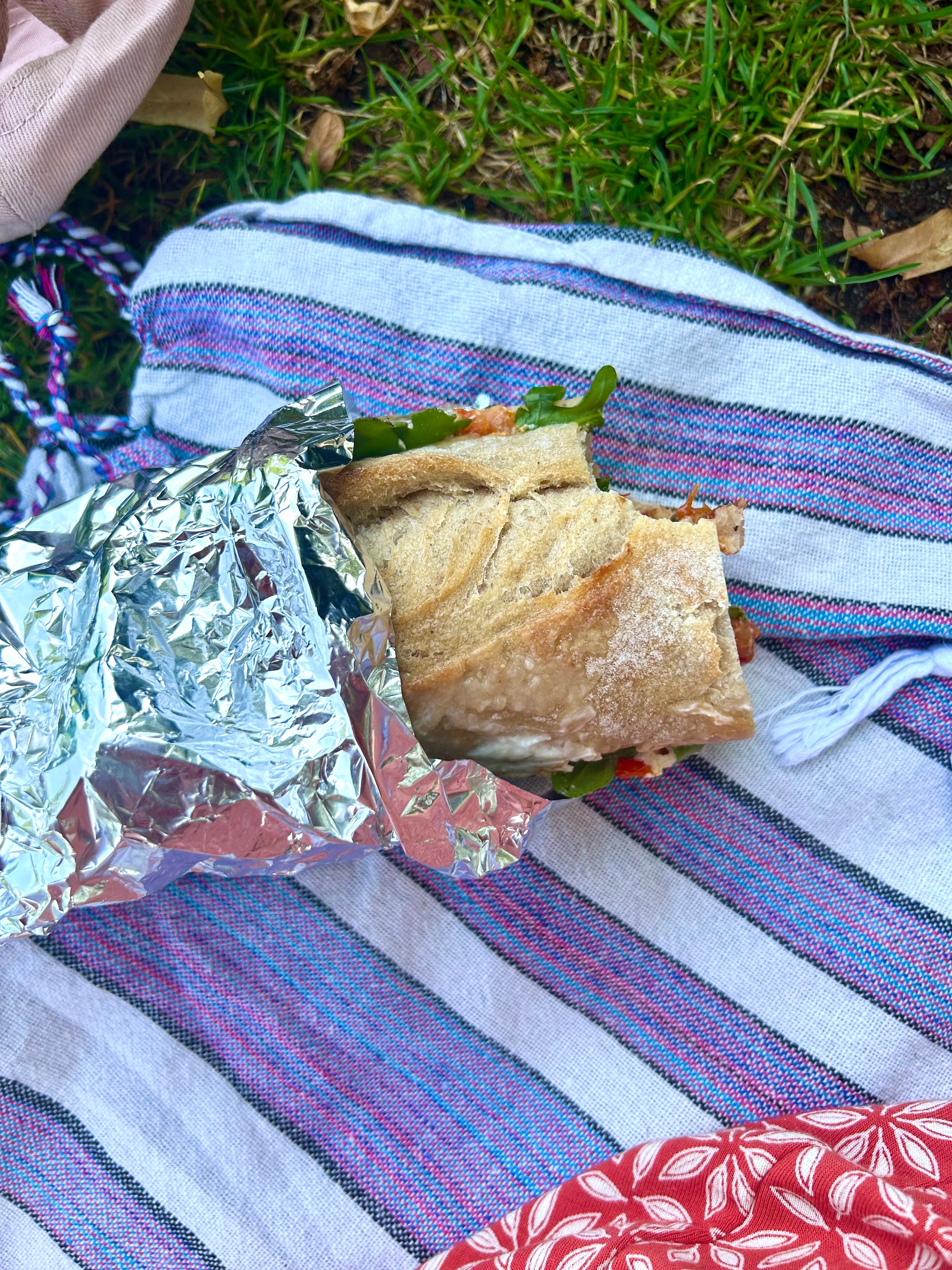
Halve the baguette lengthways and spread the pepperonata sauce over one half. Drizzle the other with olive oil, then build the sandwich with the mozzarella, rocket and a good grating of black pepper.
Switch it up
Use any kind of beans, such as borlotti or cannelini, in place of the chickpeas in the pasta.
Instead of the sandwiches, make a bruschetta. Toast the baguette then rub with a garlic clove and drizzle with olive oil. Top with pepperonata and torn mozzarella.
Make the pasta baby-friendly by skipping the seasoning and capers. Depending on your baby’s age, serve with a smaller pasta shape such as orzo, and mash the sauce with a fork to break down the chickpeas.
Use it up
The water from the mozzarella will add richness to a bolognese sauce.
Any leftover pepperonata can be stirred through grains in a salad or eaten with scrambled eggs for breakfast.
PS This week I’m loving…
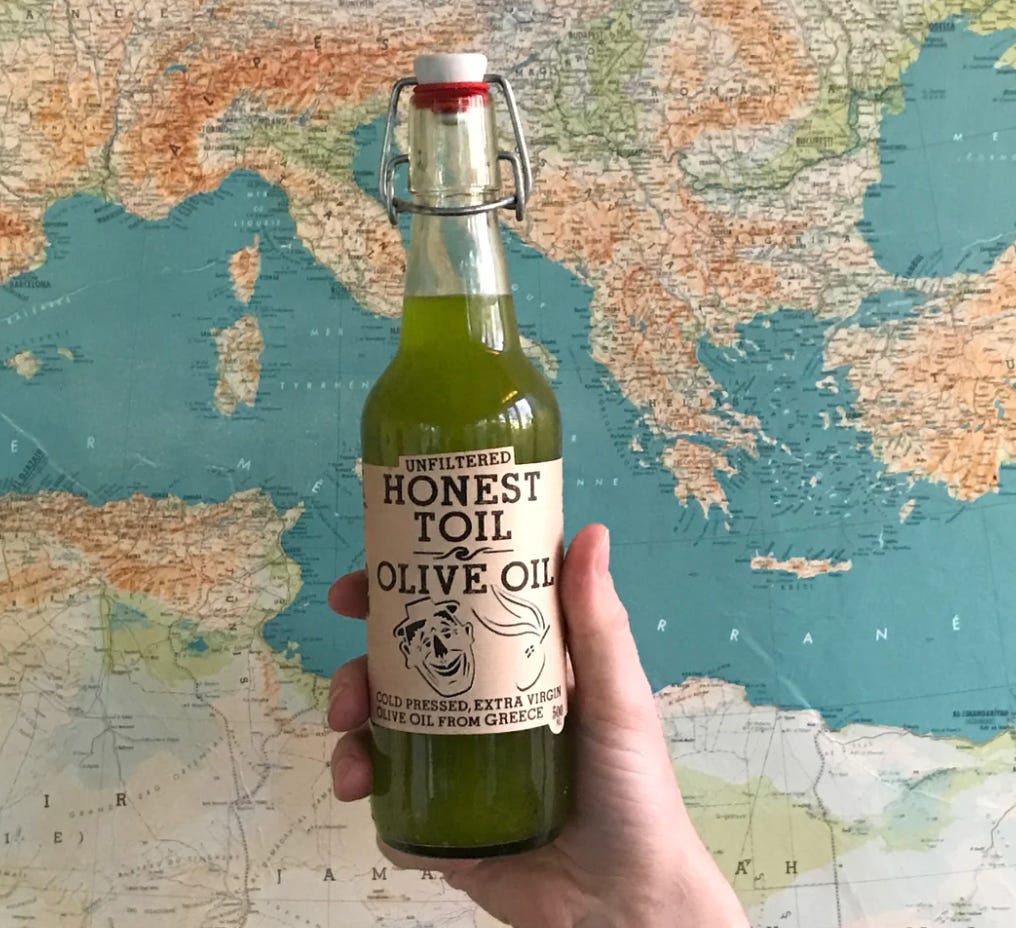
A good olive oil makes summer ingredients sing. My current favourite is this peppery, grassy unfiltered oil by Honest Toil, made in small batches in Kyparissia, on the west coast of Greece’s Peloponnese region. It’s not cheap but the flavour is immense.
The sandwich looks so good, need to give that a go for a leisurely weekend lunch 🤤